
AI-Generated Music and the Meaning of Being a Real Composer
AI-generated music is becoming harder to ignore.
Some people treat it as a new creative tool. Others call it the future of music production. Many also believe it will make creativity more accessible to everyone.
Personally, I do not feel positive about AI-generated music.
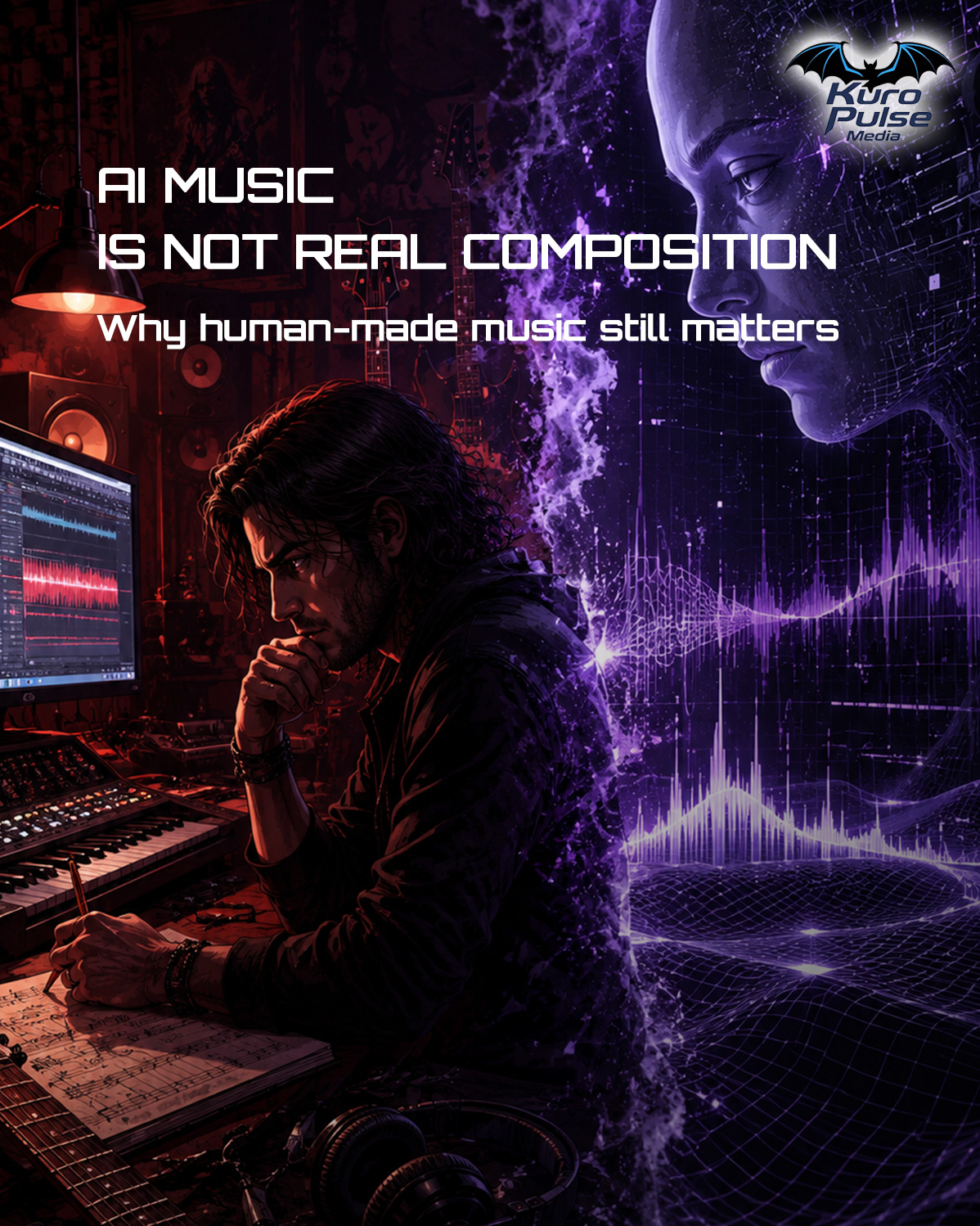
The reason is simple. I am a composer and musician who handles the entire process by hand.
I write lyrics, compose songs, record instruments, build arrangements, mix tracks, and master the final product. I keep shaping the sound until I can truly call it my own.
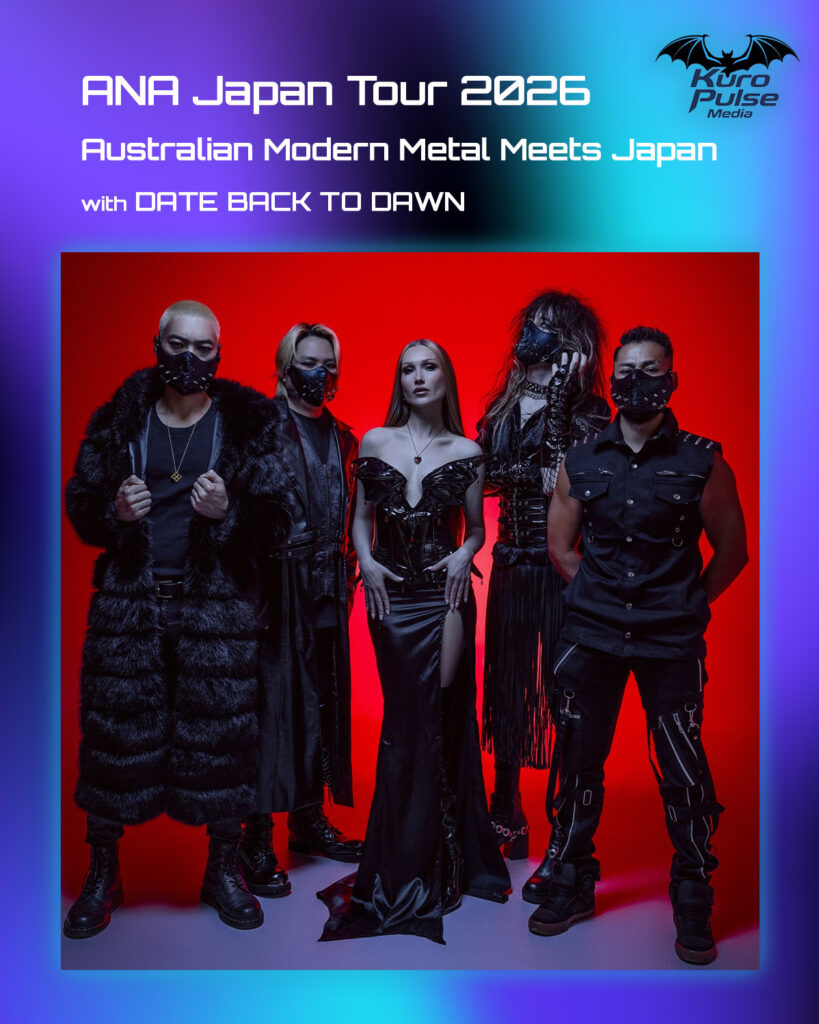
That is also how I approach the music of DATE BACK TO DAWN.
Why I Struggle to Accept AI-Generated Music
In DATE BACK TO DAWN, we do not rely on outside arrangers to build our identity for us.
We create the music ourselves.
Because of that, I can say with confidence:
This is our song.
This is my music.
To me, there is a very important difference between creating a song and simply using a song that someone else made.
This feeling also goes beyond AI.
Even when an artist sings or performs a song, I still feel some discomfort if another person wrote and arranged the music, but the artist simply calls it “their song.”
The more honest way to say it would be this:
This is a song someone made for us, and we performed it.
I do not say that as an insult. I say it because creators deserve honesty and respect.
The Weight Behind Real Music Creation
I care about this issue because I know how difficult it is to make music from nothing.
Writing a song is not the same as pressing a button.
It also takes far more than choosing a mood, a genre, and a few words.
Real music creation involves frustration, trial and error, doubt, small breakthroughs, failed ideas, and moments when you almost give up.
Many nights, you stay awake when you should be sleeping.
You record the same part again and again.
You listen to the same section hundreds of times until the emotion, performance, tone, and balance finally feel right.
That process is exhausting.
At the same time, that struggle gives the music part of its value.
For that reason, I cannot easily accept music that AI creates and people present with the same creative weight as human-made music.
Is AI Music Composition or Operation?
One of my biggest concerns involves the word “composer.”
If someone enters prompts, picks an output, and adjusts the result, I do not see that person as a composer in the traditional sense.
In my view, that role feels much closer to an operator.
Of course, the person may show taste. They may guide the direction. They may also make choices that shape the final result.
Still, composition means building the music itself.
A real composer works with melody, harmony, rhythm, structure, dynamics, arrangement, emotion, tension, release, performance, sound design, and final production choices.
All of those elements carry the fingerprint of the creator.
Once AI handles most of that work, the human role changes in a major way.
I am not saying the person did nothing.
However, I do believe we should stop treating that process as the same thing as composition.
The Problem of Originality
Originality is another major concern.
Music is not only about the final sound. The origin of that sound matters too.
A person’s life, taste, failures, influences, emotional wounds, memories, scene, culture, and experience all shape the music they create.
AI can imitate styles. It can reproduce familiar patterns. It can also generate something that sounds close to a genre.
Even so, the result often feels thin to my ears.
People with trained ears can usually sense when a piece lacks weight, intention, and human struggle.
A track may sound clean. It may sound impressive at first. It may even sound finished.
But music is not valuable just because it sounds finished.
Great music needs a reason to exist.
AI Music Can Hurt Real Talent
My biggest fear is that AI-generated music will push aside people who actually have talent.
Musicians, composers, producers, engineers, and artists spend years developing their craft.
They sacrifice time, money, sleep, relationships, comfort, and stability to create something real.
If the music world starts treating instant AI output as equal to human-made music, people will stop seeing the value of that sacrifice.
That trend is dangerous.
Real creativity takes time.
Real musicians need room to grow.
Real composers need years to develop their own voice.
If everything becomes faster, cheaper, and easier, the people who should carry the future of music may lose their place before anyone truly hears them.
Should AI Music Be Banned?
This may sound extreme, but I personally believe serious creative fields should restrict or ban AI-generated music and AI-generated creative works.
At the very least, the industry should not treat them the same as human-made art.
We need clear separation.
We need transparency.
We also need respect for human creators.
If someone uses AI, they should say so clearly.
If AI generated a song, nobody should present that song as if a human composer, band, or musician built it from zero through the same creative process.
This debate is not only about technology.
At its core, it is about value.
Kuro Pulse Insight
The debate around AI-generated music is not just about whether the result sounds good or bad.
The deeper question is this:
What do we value in music?
Do we value speed?
Do we value convenience?
Do we value content output?
Or do we value human effort, originality, emotion, skill, and the years it takes to develop a real creative voice?
For me, music is not just a product.
It is a record of human struggle.
It proves that someone lived, felt something, fought with themselves, and turned that experience into sound.
That is why I cannot accept AI-generated music as equal to human-made music.
AI may function as a tool. In some situations, it may even be useful.
Even so, I do not believe it should replace the meaning of being a real composer.
Final Thoughts
I know this opinion may be controversial.
Some people will disagree.
Others will argue that AI is just another tool, like recording software, drum programming, or digital editing.
Still, I see a clear line here.
Using tools to express your own music is very different from asking a system to generate the core of the music for you.
I believe music should carry human fingerprints.
I believe struggle matters.
I believe originality matters.
Most of all, I believe the word “composer” should still mean something.
AI-generated music will probably continue to grow.
However, if we lose respect for the people who actually create music from zero, we may also lose the true value, joy, and future of music itself.